Welcome back to the digital drawing board! Anyone who has built highly available SAP landscapes on AWS in recent years knows the pain: Writing CloudFormation or Terraform templates for an S/4HANA HA setup with Pacemaker clusters, Overlay IP routing, and EFS mounts takes days, if not weeks. Thousands of lines of JSON or HCL code must be flawless.
By mid-2025, the role of the IT architect has massively transformed. We no longer write code from scratch – we orchestrate it. Generative AI tools like Amazon Q Developer have revolutionized the creation of Infrastructure as Code (IaC). Today, I'll show how Senior Tech Consultants generate and validate architecture blueprints via prompts.
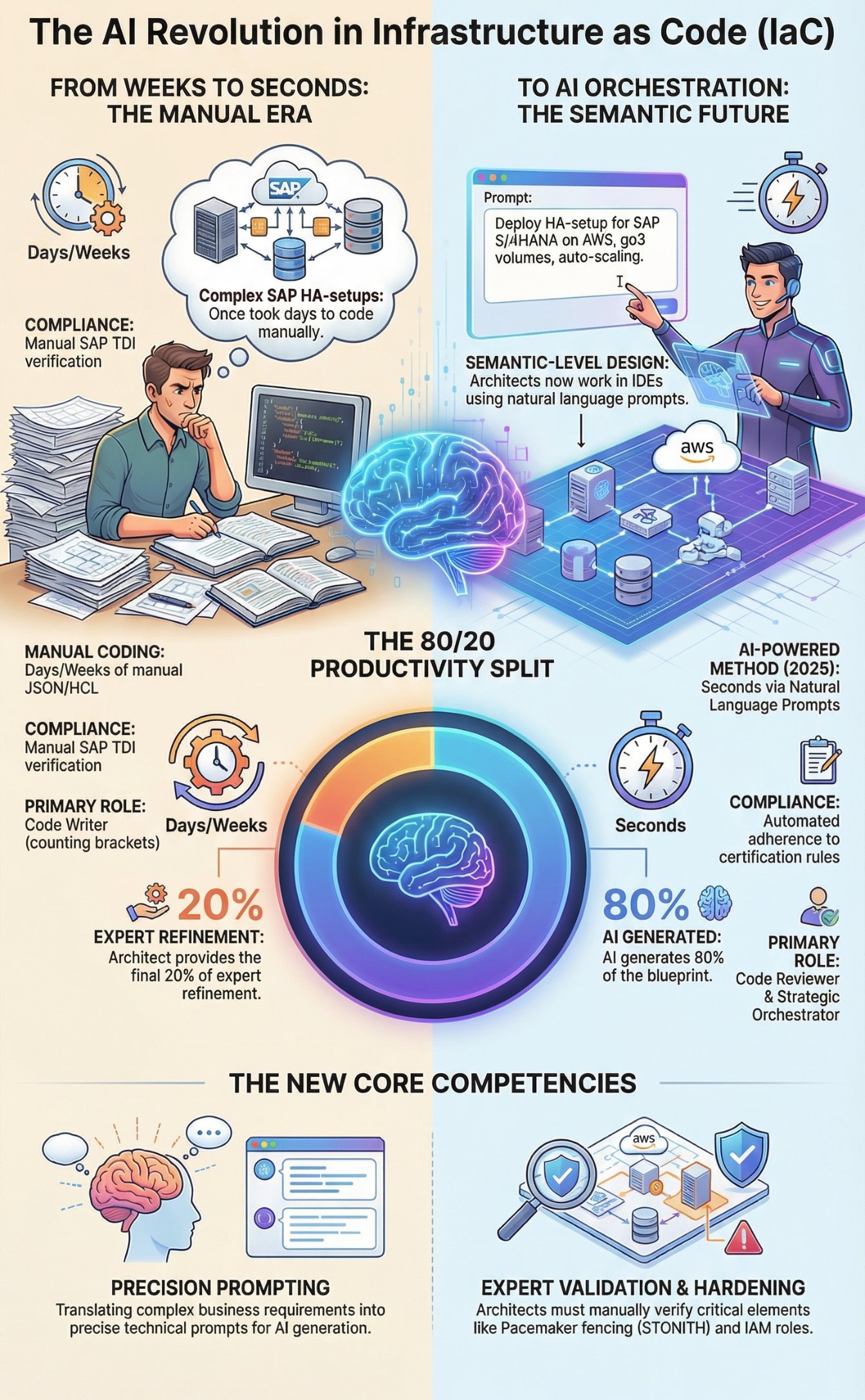
From Prompt to S/4HANA Architecture
The cloud architect's workflow has shifted to the semantic level. Instead of scouring AWS documentation for the correct properties for an AWS::EC2::Instance block, the consultant now uses their IDE (e.g., VS Code) with an integrated AI assistant.
A typical prompt looks like this: "Create a Terraform module for an SAP S/4HANA High-Availability architecture in the eu-central-1 region. Use two Availability Zones. Include r5.8xlarge instances, io2 Block Express volumes for /hana/log, a Network Load Balancer for the SAP Web Dispatcher, and configure the Security Groups according to the Zero Trust principle."
Within fractions of a second, the AI generates a syntactically correct, modular Terraform setup. The AI knows the SAP TDI (Tailored Datacenter Integration) certification guidelines and automatically selects the appropriate IOPS values for the EBS volumes.
The New Core Competency: Validation Instead of Typing
Does this make the architect obsolete? Absolutely not. The AI generates a template (80% of the work), but the final 20% requires enterprise expertise. The Senior Consultant transitions from a "code writer" to a "code reviewer." They must evaluate: Did the AI configure the fencing (STONITH) in the Pacemaker cluster correctly? Are the IAM roles for the AWS Backint Agent structured according to the Principle of Least Privilege (PoLP)?
📢 SAP & AWS ARCHITECTURE NEWS TICKER (As of: July 2025) ━━━━━━━━━━━━━━━━━━━━━━━━━━━━━━━━━━━━━━━━━━━━━━━━━━━━━━━━━━━━━━━━ 🔹 Amazon Q for Terraform: AWS has massively expanded the integration of Amazon Q into HashiCorp Terraform. The model can now analyze existing, outdated Terraform state files and make fully automated refactoring suggestions (e.g., switching from legacy gp2 to gp3 volumes for cost savings).
Conclusion for Enterprise Architects
Using AI for IaC generation is a massive productivity lever. Anyone still manually counting curly brackets in CloudFormation templates in 2025 is falling behind. The future belongs to architects who can translate complex SAP requirements into precise prompts and possess the architectural depth to harden AI-generated outputs for critical production systems.