Welcome to the future of IT operations! Every SAP Basis administrator knows this scenario: It's Friday noon, the phone rings, P1 incident. The S/4HANA system is hanging. Dialog work processes are backing up, users are getting kicked out of the Fiori Launchpad. The classic troubleshooting begins: Check ST22 (Dumps), SM21 (Syslogs), dev_disp traces, look into AWS CloudWatch in parallel, and call the storage team. A manual, error-prone process that, in the worst case, takes hours.
Early 2026 is the dawn of AIOps (Artificial Intelligence for IT Operations). Today we examine how highly specialized AI models tear down these silos and, within fractions of a second, identify the true Root Cause of an SAP outage across all infrastructure boundaries.
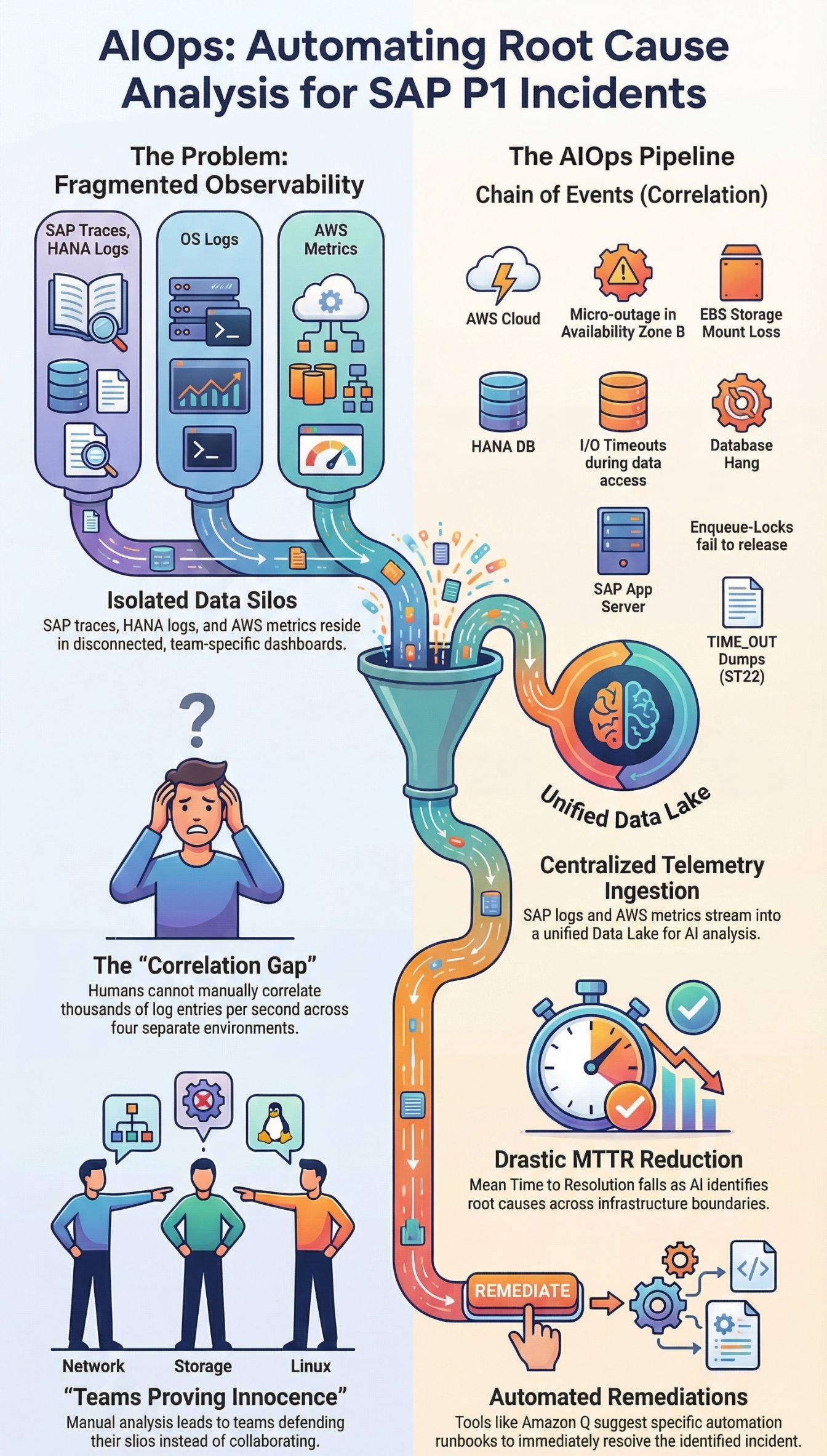
The Problem of Isolated Observability
An SAP system in the cloud is a highly complex, distributed system. The problem with classic failure analysis is fragmentation. The SAP kernel writes its errors to local trace files. The database (HANA) has its own logs. The network (VPC Flow Logs) and the storage (EBS metrics) reside in the AWS backend. No human can correlate thousands of log entries per second across four different dashboards in real time.
The Architecture of an AIOps Pipeline
This is where AIOps steps in. The architecture is based on a centralized ingestion pipeline:
-
Telemetry Data Lake: SAP logs, OS metrics (via Amazon CloudWatch Agent), and network traces are continuously streamed into a central telemetry data lake.
-
AI Correlation: Tools like Amazon Q Business or specialized AIOps engines on the SAP BTP use Large Language Models and anomaly detection algorithms to monitor this data stream.
-
The P1 Scenario: The application servers crash. The AI analyzes the timestamp (down to the millisecond) and correlates the events: "A micro-outage in AWS Availability Zone B led to a brief loss of the EBS storage mount. This caused I/O timeouts in the HANA database, which in turn meant that the enqueue locks in the SAP application server were not released. This resulted in TIME_OUT dumps in ST22."
Instead of four different teams (SAP Basis, Network, Storage, Linux) each claiming innocence, the AI delivers a precise, cross-system sequence of events.
📢 SAP & AWS ARCHITECTURE NEWS TICKER (As of: January 2026) ━━━━━━━━━━━━━━━━━━━━━━━━━━━━━━━━━━━━━━━━━━━━━━━━━━━━━━━━━━━━━━━━ 🔹 Amazon Q in AWS Systems Manager: Amazon Q is now natively integrated into the Incident Manager. In the event of an SAP outage, the AI not only generates the Root Cause Analysis but also directly suggests the appropriate SSM Automation Runbook (e.g., "Graceful Restart Enqueue Replication Server") to the on-call engineer for immediate remediation.
Conclusion for Enterprise Architects
AIOps is not a "nice-to-have" tool for trendy startups, but a business-critical lifeline for massively scaled SAP cloud landscapes. The Mean Time to Resolution (MTTR) for P1 incidents drops drastically thanks to AI-supported Root Cause Analysis. The Senior Tech Consultant of the future no longer searches for errors via grep in Linux consoles but asks their AIOps engine the right analytical question.