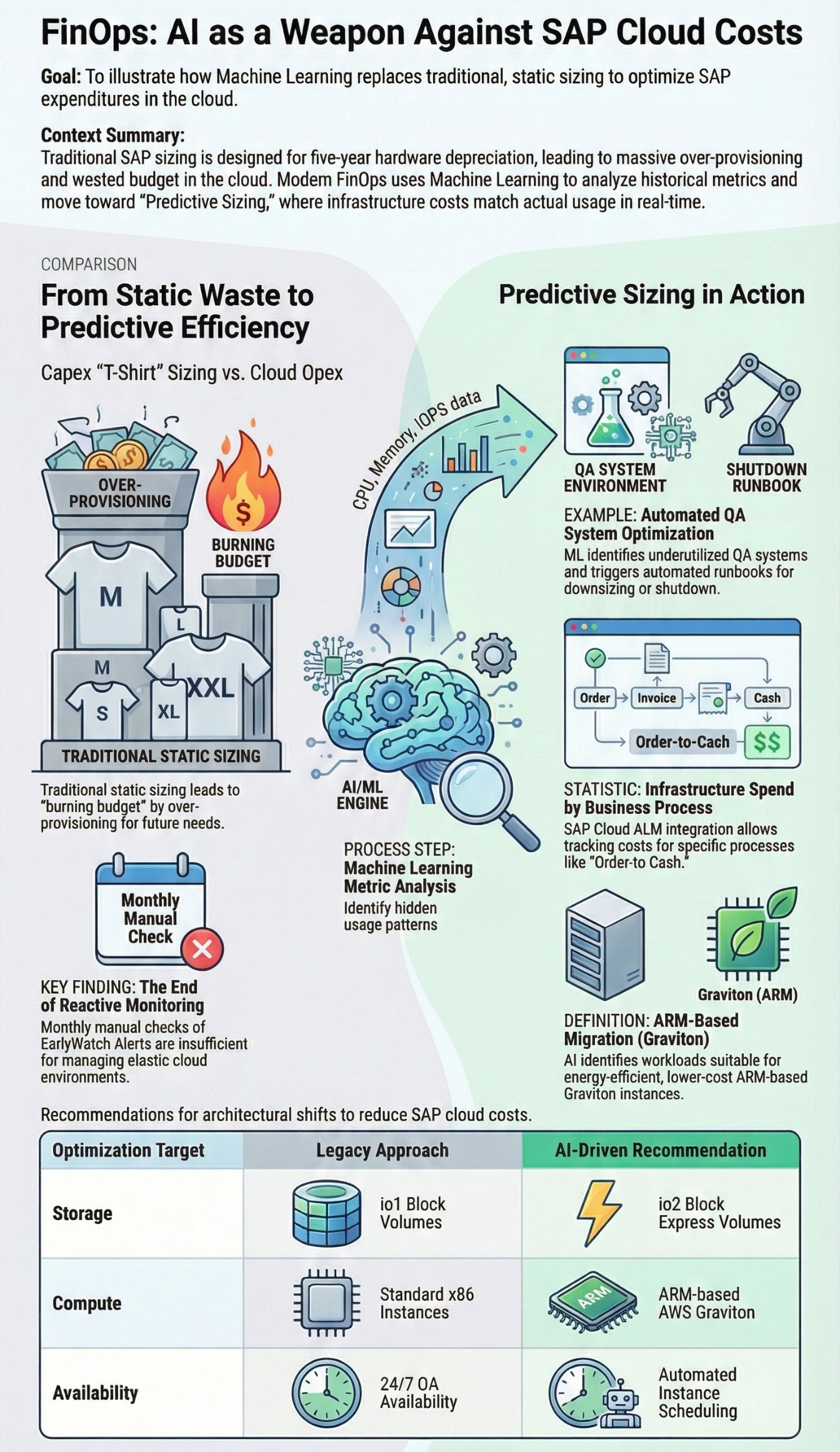
Welcome to the financial engine room of the cloud! One of the biggest misconceptions in lift-and-shift migrations is the assumption that on-premise sizing can simply be copied into the cloud. The classic SAP Quick Sizer delivers T-shirt sizes for hardware that is amortized over five years. In the cloud (Opex instead of Capex), this "over-provisioning for the future" leads to burning budget every single month.
By late 2025, the field of Cloud FinOps (Financial Operations) has evolved into a core competency for SAP architects. Today, we examine how machine learning is replacing static sizing and how predictive models ensure that we pay for S/4HANA exactly only for what we actually use in any given millisecond.
The End of Static Sizing
Traditionally, Basis admins look at the SAP EarlyWatch Alert (EWA) once a month to check CPU spikes. This reactive approach is insufficient in elastic cloud environments.
This is where AI-powered services like the AWS Compute Optimizer come into play. Under the hood, these tools use highly complex machine learning models that analyze historical metrics (CPU utilization, memory consumption, EBS IOPS, and network throughput) of the SAP instances over weeks.
Predictive Sizing in Practice
The AI detects patterns that escape the human eye within millions of lines of logs:
-
The Undiscovered QA System: The model notices that the 2-terabyte QAS system is only 15% utilized 28 days a month and only hits peak load during the month-end close. The AI generates an automated runbook to downsize the system outside of core hours (e.g., from an
x1e.16xlargeto a significantly cheaper instance) or shut it down completely via the AWS Instance Scheduler. -
Storage Anomalies: The AI analyzes the I/O queues on the HANA data volumes. It predicts when storage space for the transaction log (
/hana/log) will become tight and proactively recommends switching from io1 to the more cost-efficient io2 Block Express volumes. -
Architecture Shift Recommendations: Based on the workload, the Compute Optimizer fully automatically suggests which application servers (PAS/AAS) can be migrated to the new energy-efficient (and cheaper) ARM-based AWS Graviton instances without a loss in performance.
📢 SAP & AWS ARCHITECTURE NEWS TICKER (As of: November 2025) ━━━━━━━━━━━━━━━━━━━━━━━━━━━━━━━━━━━━━━━━━━━━━━━━━━━━━━━━━━━━━━━━ 🔹 SAP Cloud ALM Integration: SAP has massively opened the API interfaces of its Cloud ALM to external FinOps tools. AWS cost metrics now flow directly back into SAP's own dashboards. This allows SAP managers to break down exact cloud infrastructure costs to individual business processes (e.g., "Order-to-Cash").
Conclusion for Enterprise Architects
Cloud costs are not purely a finance topic; they are an architecture topic. Anyone building an SAP landscape without establishing AI-powered FinOps models for rightsizing is massively wasting resources. Today's Senior Tech Consultant must be able to interpret recommendations from machine learning models and courageously implement them in production (while adhering to SAP TDI certifications).