Welcome back to the engine room of SAP Basis! Anyone managing large S/4HANA landscapes knows the eternal struggle with the business: When will we get the maintenance window for the release upgrade? The classic "downtime weekend" from Friday evening to Monday morning is simply no longer negotiable in globalized companies with 24/7 supply chains.
SAP's architectural answer to this is the Zero Downtime Option (ZDO) in the Software Update Manager (SUM 2.0). As a Senior Basis Architect, today I analyze why ZDO is far more than just the familiar "Near-Zero Downtime" (nZDM) and how the extremely complex Bridge Subsystem functions at the database level.
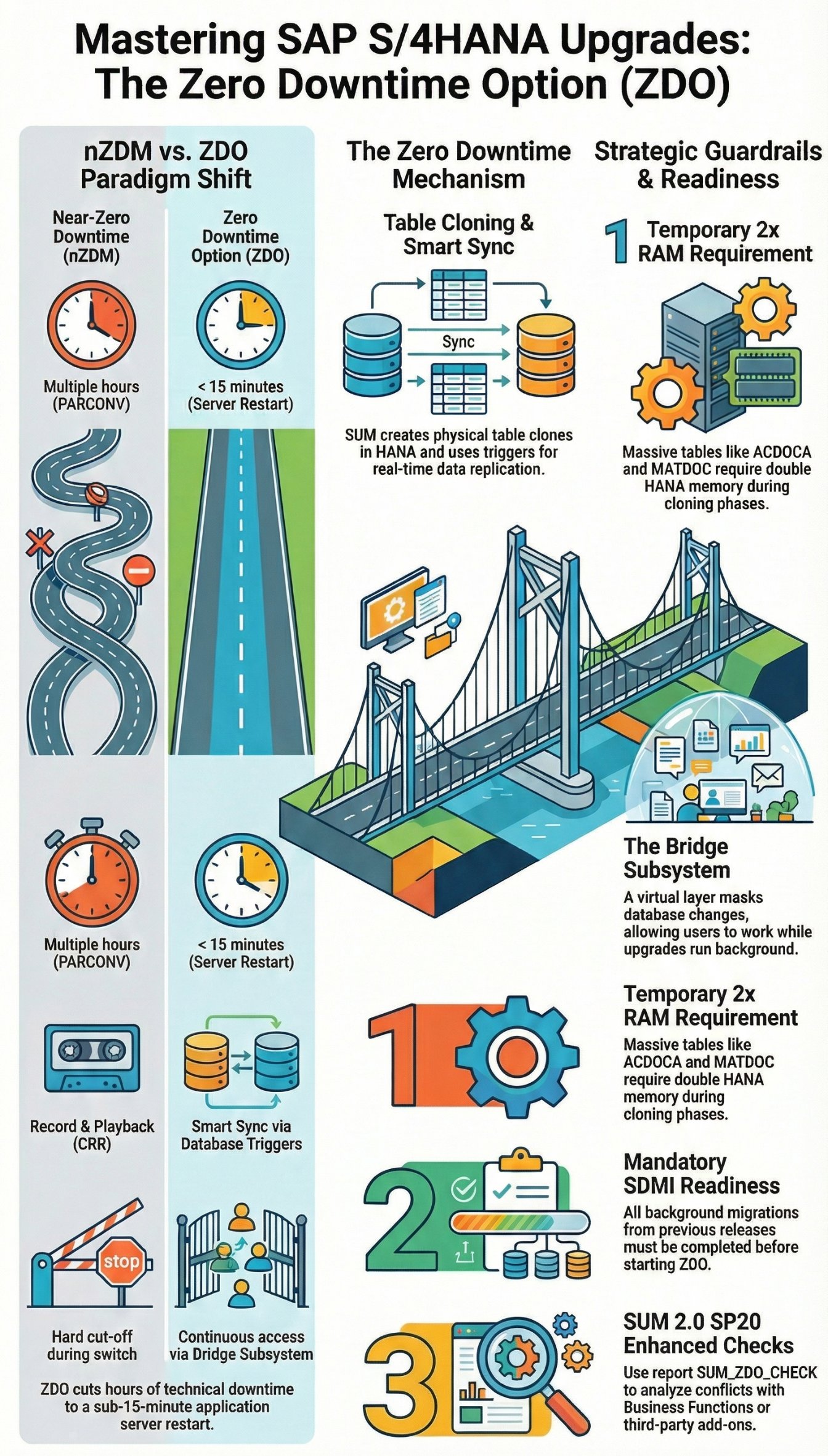
The Limit of nZDM and the Leap to ZDO
In classic nZDM (Near-Zero Downtime Maintenance), the SUM records changes during uptime (Record & Playback via CRR) and plays them into the shadow system. The problem: The execution of the switch framework and the final table conversion (PARCONV) strictly require a hard technical downtime, which, depending on the database size, still takes several hours.
ZDO radically changes this paradigm: It almost completely eliminates technical downtime for the end user. The "downtime" is reduced to merely restarting the application servers (PAS/AAS), which is often completed in under 15 minutes.
Deep Dive: The Bridge Subsystem and Table Cloning
How does ZDO solve the problem of the SUM massively rebuilding table structures (DDIC) while thousands of users are simultaneously posting documents in S/4HANA? The architecture is based on three highly complex mechanisms:
-
Table Cloning: If a table undergoes a structural change due to the upgrade (e.g., a new field is added), the SUM creates a physical clone of this table on the HANA database.
-
Database Triggers (Smart Sync): The SUM places highly intelligent triggers on the original table. If a user posts a sales order to the original table during the upgrade, the trigger synchronously replicates this data record into the cloned, new table space.
-
The Bridge Subsystem: Here lies the true magic. The SUM creates a virtual "Bridge Subsystem". Productive users are routed to this bridge system. The SAP system masks the database accesses (via Database Views). The user sees and writes to the old tables, while the SUM quietly performs the release upgrade, XPRAs, and AIM conversions in the background (on the cloned tables).
Limitations and Architectural Prerequisites
This magic does not come without a price. A ZDO upgrade requires massive architectural discipline:
-
Silent Data Migration (SDMI): The system must strictly be SDMI-ready. All background migrations from the previous release must be completed.
-
No Structural Changes to Z-Tables: If custom code (Z-tables) requires extremely hard DDIC changes during downtime, the SUM may not be able to build the bridge mechanism.
-
Increased Storage Space: Since massive tables (like
ACDOCAorMATDOC) are cloned and both versions reside in the HANA memory in parallel, the RAM requirement for these tables temporarily doubles during the ZDO phase.
📢 SAP BASIS NEWS TICKER (As of: August 2024) ━━━━━━━━━━━━━━━━━━━━━━━━━━━━━━━━━━━━━━━━━━━━━━━━━━━━━━━━━━━━━━━━ 🔹 SUM 2.0 SP20: The latest Support Package of SUM brings advanced readiness checks for ZDO. The report
SUM_ZDO_CHECKnow analyzes even more deeply whether conflicts exist with Business Functions or third-party Add-Ons (partner code).
Conclusion for Basis Architects
The Zero Downtime Option is the absolute premier class of SAP Basis administration. It is not a simple "check-the-box" process in SUM. ZDO requires months of planning, exact HANA sizings for table cloning, and intensive integration testing. However, those who master the mechanics of the Bridge Subsystem deliver the ultimate added value to their company: Major S/4HANA release upgrades without production downtime.